
Having the opportunity to work in nearly any country just because my mother tongue is English is a HUGE privilege, and it’s definitely one I don’t take lightly. If you ever consider teaching English abroad, I implore you to reflect on that privilege heavily before making the decision to do so. When you teach abroad you should recognize very quickly that you are able to not only travel but work abroad MUCH MUCH easier than anyone else in the world. Be humble, don’t be an asshole.
I graduated from college during the financial crisis in 2008. I continued to work for some marketing research companies as they were searching for an anthropologist’s perspective and were the only sector hiring. Additionally, I continued library work at the public library with four years of university library experience under my belt. Surprisingly, I was able to land some freelance anthropology assistant work through my friend and her position working for the government.
At this time I wasn’t really satisfied with working three jobs at a time and being able to save up enough for small vacations every now and then. I applied for work in the federal government per my father’s advice since he has worked in the military and other sectors of the government his whole life. Even after applying for every single position that mildly interested me or included my qualifications, I couldn’t even get an interview back for secretary positions. The farthest I got was applying for the TSA and doing their testing portion of the interview. I never heard back from them.
Frustrated, I decided to apply for the Peace Corps. At this time they had recently increased their end of contract stipend to around $8,000 and I believed in the mission of the organization. I thought this might be a good way for me to get out of USA, gain some experience, and learn a new language. However, I had to face the fact that you don’t get to choose where you want to go or what you want to do. I really wanted to get back to Turkey after spending a semester there, but their programs in Turkey were cut some years ago. I had also heard about community based programs in Jamaica, which was my first choice, and I ended up selecting another island region and eastern Europe/Balkans. The interview process was fine and it was easy to talk to those vetting you because they were former volunteers. The application process was a pain in the ass though and they do require a rigorous medical check. At the time, I didn’t have health insurance so managing these requirements was a bit of a burden on me. I even had to fill three spots in my teeth that had the potential of becoming a cavity within the next three years. They didn’t want you to be at risk while in the field. Since I was qualified to teach English because of earning a TEFL certificate in the last year of college, that was the best fit for me according to them. Nearing the end of this marathon application and approval process, I was accepted into the English teaching program in the Balkans on the condition that I boost my vitamin B12 and vitamin something else deficiency and check back with a new round of blood tests four months later. I decided the whole process was steering me away from this commitment and forcing me to do what I really wanted to do anyways, which was go to Turkey to teach. In this way, I could actually earn money and have the freedom to do what I wanted as an American Turk living in Istanbul and not as a volunteer in eastern Europe.
Naturally, I moved on to the next step and contacted a language school that I knew of in Turkey called English Time. I had the interview with their owner and was immediately offered a job. We agreed on a time for me to come to Turkey and they even arranged for me to stay with someone, who was a friend of the school living in Bostanci, while I looked for a place to live.
My position at English Time was my first job teaching abroad. Usually language schools don’t pay you a monthly salary, rather they give you an hourly rate. Additionally, your days are mostly split between morning sessions and evening sessions. This can be annoying for time management because you have a giant gap in the middle of your day. Sometimes teachers had to lead speaking groups in the middle of that time, and sometimes it was just our free time. However, since the work was hourly, you only got paid for the hours you were teaching inside the school, but not for your prep or planning time. Ultimately language centers were and are like an initiation for new teachers coming to work abroad. I’m thankful for my experience there, but I’m even more thankful I don’t have to work there anymore.
In language schools, you also have some Turkish teachers who teach the first few sessions of the program to get them used to the sounds and the alphabet of English. They teach them the bare basics to get them ready for the native English teachers. If you’re teaching lower levels, it will benefit you to know a bit of the local language because it beats some of the confusion for both parties. On the other hand, the program was promised to be all in English and teachers were supposed to only speak English inside the classroom. Their program had six different levels and TOEFL. However, the program was really garbage. English Time had their own course book with no logical flow to the units, and there were always mistakes in the book that we would have to remember to point out (which was very annoying). They insisted on breaking down the units as reading, writing, grammar, and speaking/listening. After each unit you would have a test. In my opinion, it’s really hard to teach like this and it’s even harder to learn like this. However, English Time refused to let us change the program. They also refused to let the teachers edit the course book and make it more student friendly. This is how I knew that working for them was a bit of a joke. In summary, I was always SO IMPRESSED with students who managed to learn English in this way with this program. Well done, English Time students.
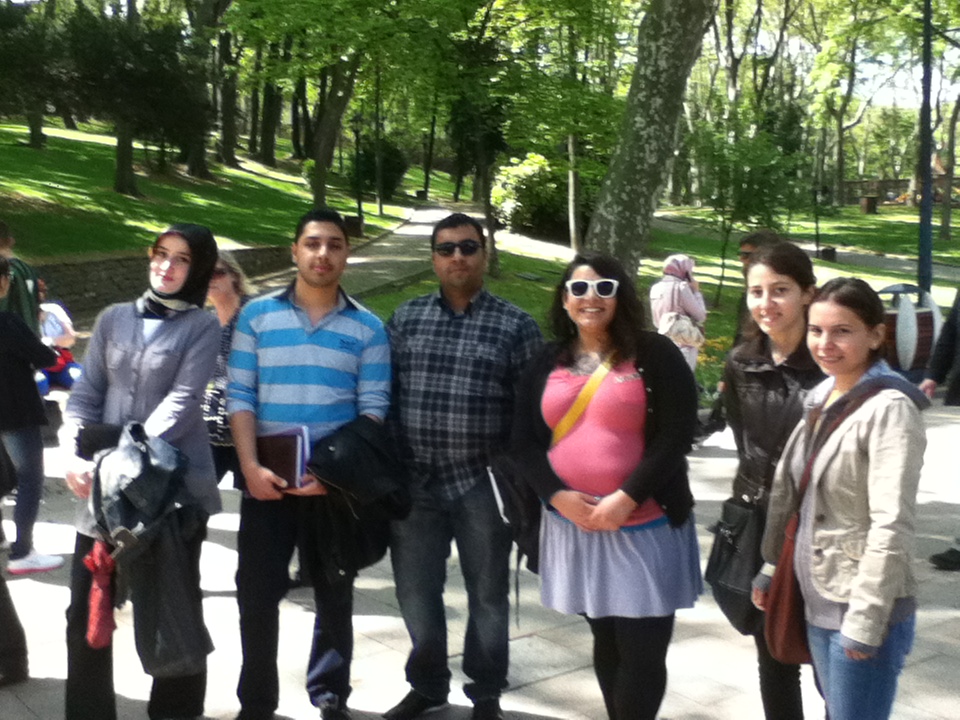
The experience working at English Time wasn’t all bad though. I made some good friends also working at that language center. Additionally, at some point, I was able to convince the manager to let me take students on field trips to practice their English in real life outside with different kinds of activities that we would design together as a class. We all loved the field trips. Also, I forced myself to learn English grammar so well that I have an explanation for nearly anything related to the topic. It made me super resourceful as I had to supplement most of my lessons because our given materials were far from adequate. The conditions made me a better teacher in the end.
Every time you apply for schools in other countries the process of interviewing, negotiating a contract, and getting the permission to live and work there is different. In Turkey, there aren’t many reputable recruiting agencies. People are expected to apply to the schools directly. Additionally, the school systems are different. In Turkey, teachers can work at language schools (usually for adults and high school+ students), private schools (preschools, primary, middle, and high schools), or at universities usually as part of the English preparatory program required for all first year university students.
After working for a language school and gaining experience, I was more qualified for higher paying and better positions at private schools. I taught 4th and 5th grade in Bilfen for two years and for Açı for three years teaching 5th grade. These schools offer SGK (government insurance and retirement) as well as other perks like a living allowance, flight to your home country for every year you sign a contract, free service bus to commute to/from school, lunches and breakfast at school, and sometimes private insurance.
For these private schools, applicants talk directly to the person in charge of the English staff, HR, and the English department coordinators. Ultimately, it gives you more of an idea about the people you’ll actually be working with, and you have a chance to ask more specific questions related to the program you’ll be teaching.
When I decided that I wanted to work in South Korea the process was much different. First, you have to choose a recruiter and they do an initial interview and then attempt to place you in a school. They offer a way for you to apply to public schools and for private courses that are called Hagwon. I’ve heard that the public school positions are really great, easy, with more time off, and less responsibility. I’ve also heard that the program introduces you to other public school English teachers in your area as well so it allows you a bit of community. Unfortunately, that was not the case for me.
Footprints was my recruiter. They were based out of Canada. I would NOT recommend this agency because I had about three different people contacting me about jobs and positions. It was confusing to keep track of who I was supposed to be communicating with since different people would always respond to my emails. Additionally, they instructed me incorrectly about applying to public schools. To my dismay I had completed the application with error and it couldn’t be submitted or considered by that program. Additionally, I had asked to be placed in Seoul, Daegu, or Busan. I am aware that these cities are highly coveted by applicants but I had been teaching, gained experience and was confident of my ability to give kids a proper English education. They sent me a few job offers outside of Seoul, in the suburbs but still about an hour away from the city. I became frustrated with their offers and finally asked why I couldn’t get any offers in the cities that I really wanted to work in. They told me that it’s highly competitive to get work there. I said that I am a good certified candidate with experience. They told me in the end that I didn’t ‘look American enough.’
In hindsight, I should have taken this information and said FUCK THIS. I should have ran away from that plan, but I had already started the whole process with the background check which took a long time and cost money. I was determined to work there because I had already made up my mind that it was my next move. I had friends there and I had already put so much energy into the process. In those days I was laser-focused and once I’d made a decision I wouldn’t re-evaluate my plans according to new information.
The next offer I received was from SLP in Jeonju. I took it. This school ended up being awful and they had other teachers leave without completing their contracts. Also, they had problems with the director of the school. When I got to the school, I realized what I had gotten myself into. The director had an insane temper and only hired women because men ‘caused too many problems’. Basically, he thought women would be more subservient to him and not question him. I’m truly disappointed in Footprints in their vetting process for the schools that they recruited for. I would not trust them again with my employment or placing me in any kind of position in a foreign country ever again.

I would like to say that even though I had a terrible experience with the director of that school and my recruitment agency, I really loved teaching kindergarten in South Korea. My students were so sweet and we found ways to learn in a fun way even though the director only wanted them to work. Before getting a job in Korea, I was intimidated by teaching small children but they made it easy for me to adjust. Even though our program could be challenging at times, there was an obligation for us to teach them songs and dances for various performances throughout the year. My co-teacher (who was extremely sweet and helpful) and I would choreograph different songs with the class and we would perform them for different parties and ceremonies. Also, we went on a field trip every month… and who doesn’t LOVE FIELD TRIPS?!!! I thank Korea for my first experience teaching a class full of small learners.
Many other Asian countries also have recruiting agencies that place teachers with employers, but that was my first and last time using one. When I decided I wanted to go to Vietnam, I had noticed that another teacher I worked with in Turkey was posting about his school looking for teachers. He had been there for three years and so I thought it couldn’t be that bad. I told him I was interested and he linked me with HR directly to apply for the job.
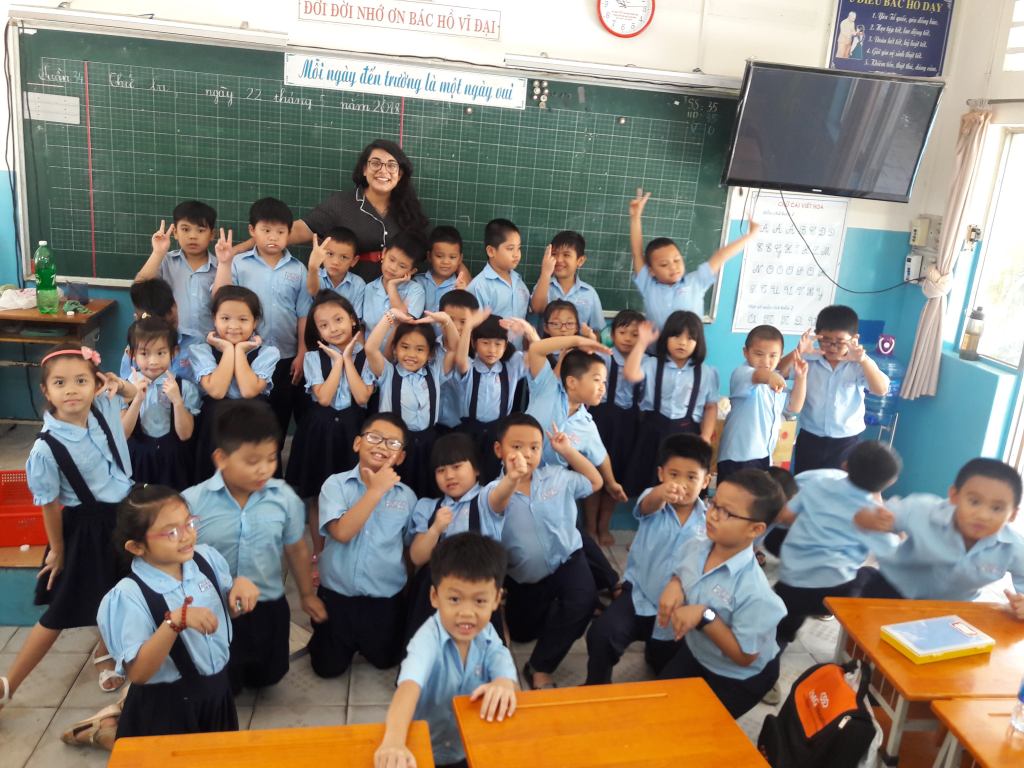
The company’s name was EMG and I worked with them for one school year and they even let me come in a little bit late in the school year because I had made some commitments in the USA until October. I was impressed with their willingness to work with me and how they modified my contract to accommodate my time. In my opinion, HR was very thorough and helpful with all of the process. Additionally, the schools had other English native teachers who coordinated the programs for each grade. This EMG language program was organized with public schools that allowed parents and students to opt into this English program to be worked into their normal school days. We would see them for 3.5 hours a week. This program was amazing because this gave normal kids a chance to learn English at public school with native English teachers. This was probably my favorite program I’ve ever worked for. The workload was so minimal and the pay was decent. My students were amazing and so excited for English class! The schedule gave teachers a chance to do things in between classes and even leave for lunch if they desired. It was the easiest teaching job I have ever had, but (not) surprisingly native English teachers still complained relentlessly about the job.
If you’re looking to teach abroad, do your research for the region where you’re thinking about working. Look at what kind of programs are available and if you contact schools directly or need to go through a recruiter. When you work with a recruiter, read reviews on how they operate. Try to understand if they take a commission and what that means for your salary. Additionally, if they set you up with a school, ask to talk to a teacher who works there. Research your cost of living for the city you’ll work in, so you can understand if your salary will be enough to cover your rent, bills, and general cost of living. Some schools offer housing or a stipend to help you pay rent. Some also pay for your flight to get there and get home. Be aware of what kind of health insurance is offered and what it covers. Additionally, see what kind of tax is taken out of your salary or if you will be responsible for paying the tax yourself. When you work abroad as an American, you can submit your taxes as a worker abroad and generally don’t have to pay income tax if it’s under something like $80k/year. You should also be researching the exchange of local currency to your home currency to have a better understanding of what you stand to gain or lose on a global economic scale. Some currencies are obviously more stable than others. Be sure to ask what kind of hours you will be working, and how many classroom hours you will be teaching. Additionally, try to understand if there will be any responsibilities after working hours and on weekends. That’s my advice for before you make the leap to take a teaching job abroad.
After you’ve accepted a job and you get to your new country of employment, my biggest advice is to remain positive. If you get to the place you’ve accepted work and it’s not what you had been expecting, try to look on the bright side and make the best of it. Especially if it’s your first position teaching abroad, the experience is extremely valuable. You’re building your CV to get better and more competitive positions. Look for support where you can with HR, with your coworkers, and with others who are living in the same city. Lastly, have a great time! Having the opportunity to teach abroad is so special and specific to being lucky enough to have English as your first language. Don’t take it for granted.
 Brown Beyond Borders
What a great journey! It includes all ups and downs about teaching abroad. Also, the photos were so adorable 🤩
LikeLike
Thank you for reading it! The students are the best part about teaching abroad!! Sometimes I miss teaching kindergarten and preschool because they learn so fast and they’re so sweet! They are so excited to learn and after having a foreign teacher so early in their lives they are more tolerant to differences, especially being different from the Americans they would see on tv or in movies.
LikeLike